Semi-stand development with Rodinal 1+100
One hour, two agitations and a lot of patience. A practical note on semi-stand, bromide drag, and the developer that outlives every bottle in my cupboard.
Semi-stand is the lazy photographer's method that turns out to need discipline. The idea is simple: very dilute developer, a long time, almost no agitation. Developer next to the dense parts of the negative exhausts itself quickly and stops working, while next to the thin parts it keeps going. The result is compressed contrast: shadows get developed fully and highlights are held back.
I use it for rolls where I do not trust the exposure, or where the light ranged from deep shade to bright sky on the same roll. It is not my default, and I will come to why.
My routine
Rodinal is a good match because it keeps for years in the bottle and works well at high dilution. For one roll of 35mm in a 500 ml tank:
| Step | Detail |
|---|---|
| Dilution | 1+100, 5 ml concentrate in 500 ml water |
| Temperature | 20 °C |
| First agitation | 1 minute of gentle inversions |
| Rest | Tank stands on the counter |
| Second agitation | 4 gentle inversions at 30 minutes |
| Total time | 60 minutes, then stop and fix as usual |
Five millilitres is the minimum amount of concentrate I use per roll, regardless of tank size. With less, the developer runs out before the shadows are done.
The second agitation is not optional. With pure stand, I got streaks along the sprocket holes on every third roll.
When it does not work
The streaks are called bromide drag. Developer products are heavier than fresh developer, and with no agitation they sink and slide down the film, slowing development in their path. You see it as lighter streaks below dense areas or the sprocket holes. One mid-way agitation mixes things enough to prevent most of it.
Scenes with large even areas, a grey sky, snow, a white wall, show the problem first, because any unevenness stands out. For those I go back to normal development.
How the negatives look
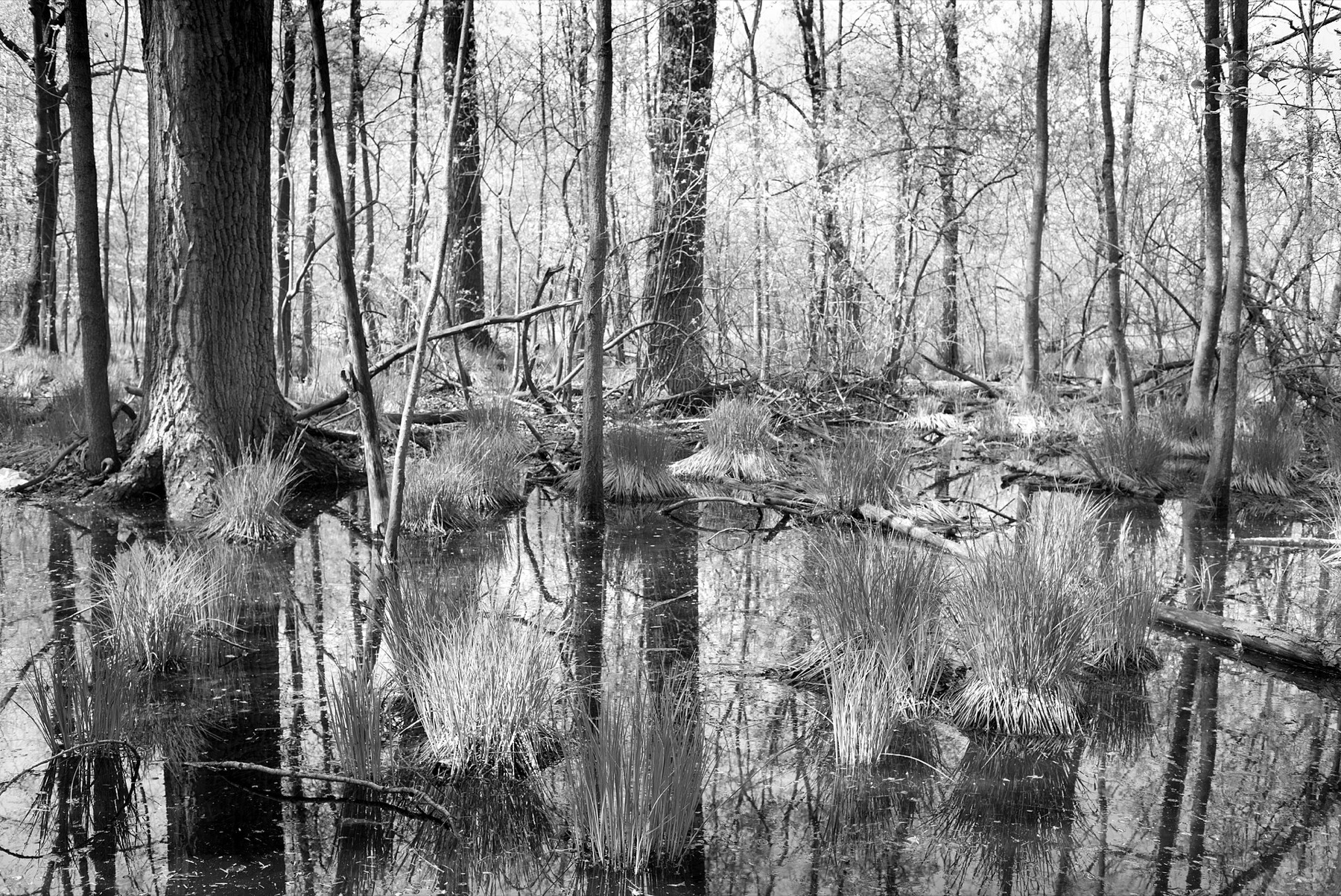
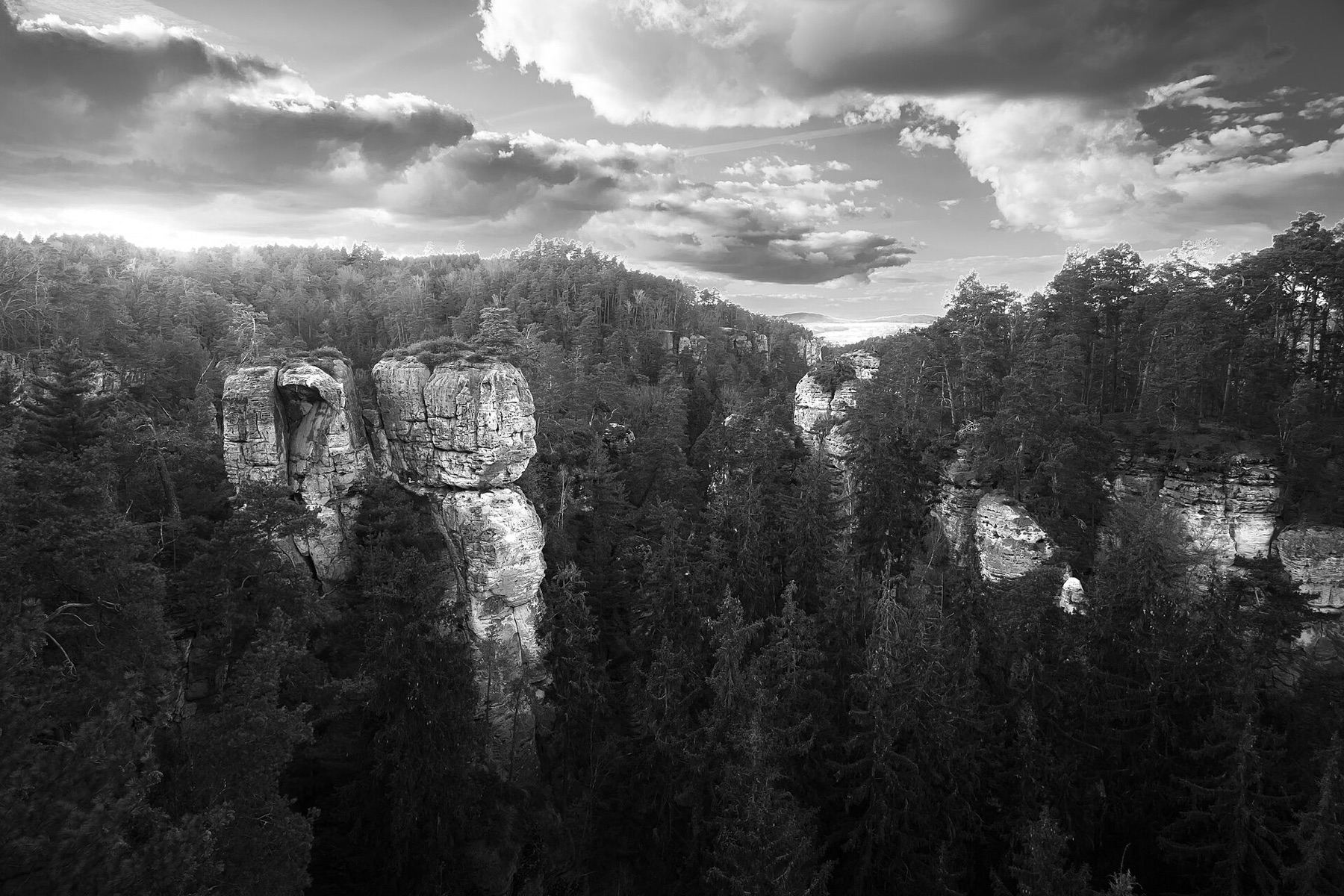
Very sharp, because dilute Rodinal emphasises edges. Grain is visible but crisp. The tonal scale is a little flat straight from the tank and needs a bit more contrast when printing or scanning. For a roll shot through a whole day of changing weather, though, that is a fair trade: every frame is printable.
— Elin, 13 September 2026